+91 95098 68888


+91 95098 68888
17 December, 2025
_(1).jpg)
Many women hear the term ovarian cyst and immediately feel worried—but in reality, most cysts are harmless and very common. Women of all ages can develop them, and in many cases, they disappear without any treatment. Still, it is important to understand what they are, why they form, and when medical help may be needed.
An ovarian cyst is a small pocket or sac filled with fluid that forms on one of the ovaries. Ovaries are part of the female reproductive system and release an egg every month. During this cycle, small sacs naturally form and usually break open to release the egg. Sometimes, these sacs don’t behave as expected and end up becoming cysts.
Most ovarian cysts are painless and temporary. You might not even know you have one until it shows up on a routine ultrasound.
Functional cysts: The most common kind, usually disappear on their own.
Dermoid cysts: Made from cells that can create hair or skin-like material.
Cystadenomas: Fluid-filled cysts that can grow large but are usually noncancerous.
Endometriomas: Formed when endometriosis affects the ovaries.
Many cysts don’t cause any symptoms at all. But larger cysts or certain types may lead to noticeable discomfort.
Pain or heaviness in the lower belly
Bloating or swelling
Discomfort during periods
Painful intercourse
Needing to urinate more often
Irregular menstrual cycles
These symptoms can come and go, depending on the size of the cyst. However, some warning signs should never be ignored:
Sudden, sharp abdominal pain
Fever or vomiting
Feeling faint or dizzy
These can be signs of a ruptured cyst or ovarian torsion, both of which need urgent medical attention.
Why Do Ovarian Cysts Form?
Ovarian cysts can appear for several reasons. Understanding these causes helps in preventing future problems.
Irregular periods or hormonal imbalance can cause cysts to form unexpectedly.
Sometimes cysts form naturally in early pregnancy to support the growing embryo.
Women with endometriosis may develop cysts when endometrial tissue grows on the ovaries.
PCOS causes multiple tiny cysts along with symptoms like irregular periods, weight changes, and acne.
No matter the cause, regular check-ups help in early detection and smooth management.
The good news is that many ovarian cysts don’t need any treatment at all. Management depends on how the cyst looks, its size, and the symptoms it causes.
Small cysts often disappear on their own within a few weeks. Doctors may suggest waiting and doing a repeat ultrasound later.
2. Medications
In some cases, the doctor may suggest hormonal treatments to help balance your cycle. These medicines can prevent new cysts from developing and keep your periods more regular.
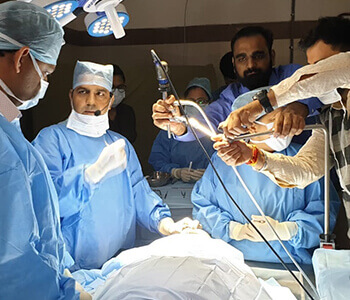
If the cyst is large, painful, or concerning in appearance, surgery may be the best option. At Jaipur Doorbeen Hospital, minimally invasive laparoscopic techniques are used, which means:
Tiny cuts
Less pain
Faster recovery
Short hospital stay
Surgery is also necessary if a cyst twists the ovary or bursts suddenly.
Ovarian cysts are more common than most women think, and the majority are completely harmless. Still, paying attention to symptoms and getting regular check-ups can prevent complications.
At Jaipur Doorbeen Hospital, Dr. Sushila Saini provides clear guidance, accurate diagnosis, and gentle care to help women feel confident and informed about their reproductive health. If you’re experiencing symptoms or simply want reassurance, reaching out to a specialist can make all the difference.

01 November, 2020
01 November, 2020